
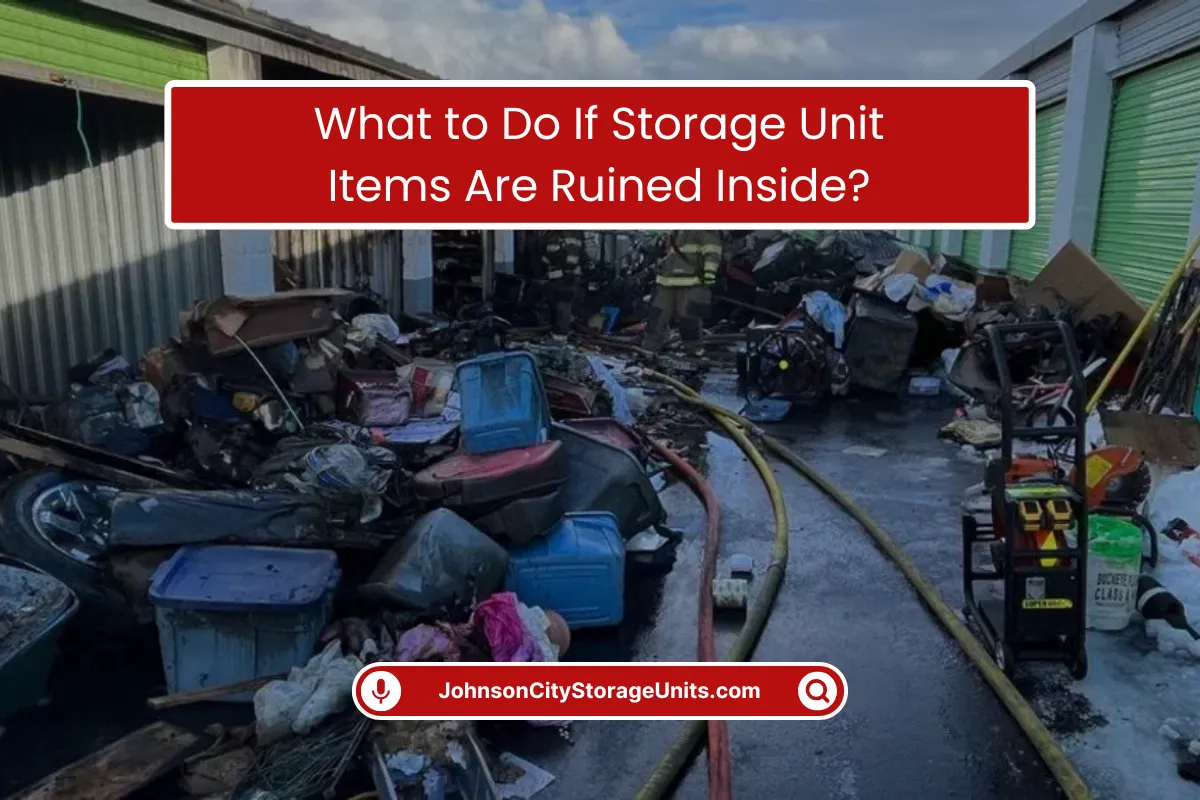
You know what? Let me just talk to you straight. I’m writing this from my kitchen table, and honestly? I’m thinking about the time I found my own stuff ruined. Not in storage, but in my parent’s damp basement. My old baseball cards. My high school yearbooks. That box was just… gone. A pulpy, smelly mess. I remember that hot wave of panic, then that sick feeling of loss. It’s not just stuff. It’s the memory of who you were when you got it.
So you’ve just rolled up that storage unit door. Maybe you heard a weird squelch. Maybe you saw the stain on the ceiling. Maybe you just smelled it before you saw anything—that sweet, rotten, wet cardboard smell. Your stomach drops. “Oh, no. No, no, no…”
First thing? Breathe. And don’t move a single, solitary thing
I mean it. Your brain is screaming at you to start pulling boxes out, to assess the damage. Don’t. You will destroy the evidence of what happened and where it came from. You need to be a crime scene investigator for your own life right now.
Get your phone out. Start a video. Say the date, say your name, say the unit number if you can see it. Narrate what you’re seeing. “Okay, it’s Tuesday morning, I’m at unit 307, and I’m looking at… wow, a huge brown water stain on the back wall, and the box labeled ‘Christmas’ is collapsed and soggy.” It will feel stupid and dramatic. Do it anyway. Then take a hundred photos. Get close. Show the mold blooming on the side of the leather chair like a horrible grey flower. Show the rodent droppings scattered like little black grains of rice. Show the exact spot where the water is dripping from. This is not overkill. This is your ammunition. Because in about an hour, you’re going to need it.
Next, you gotta figure out the “why.” And this is where it gets messy
Look up. Is there an actual drip coming from a pipe or the roof? That’s a facility problem. But—and this is a giant, crushing “but”—pull out that rental agreement you signed. You know, the one you skimmed while the guy behind the counter tapped his pen. Read the tiny print about “Acts of God” and “environmental damage.” I’ll save you the legalese: it basically says they’re not responsible. They rent you concrete and a roll-up door. They don’t guarantee it’s a perfect, museum-quality environment. To have any shot at them covering it, you’d have to prove they knew the roof was a sieve for six months and did nothing. Good luck.
Now, look at how you packed. Be brutally honest. Did you put that nice rug right on the bare concrete floor? Concrete is cold. It sweats. That moisture traveled right up into the fibers. Did you shove cardboard boxes tight against the metal wall? That wall gets hot in the sun, cold at night. Condensation happens. Did you pack anything that was even a little bit damp? A sleeping bag, some winter coats after a snowy day? You trapped that moisture in, and it threw a mold party.
Sometimes, the disaster is a team effort. A tiny roof leak meets your improperly stored stuff. That’s the worst scenario, because then everyone points fingers.
Time for the walk of shame to the manager’s office
Do not go in there guns blazing. The person at the desk is not your enemy. They’re just the first person you see. Go in calm, but with your proof ready.
Say this: “Hi. I need your help. I just opened my unit, number 307, and there’s been some major water damage. I’ve taken photos and video. Is there a manager or maintenance person who can come look at this with me right now to figure out the source?”
This is key. You’re asking for help, not making accusations. You’re showing you’re organized. You’re getting them on-site to see it with you. If they say, “Oh, that’s from the AC unit overflow last week,” you’ve just gotten them to admit a potential cause. Get a name. Get a work order number. Send a follow-up email that afternoon: “Dear [Name], confirming our conversation today at 10 AM regarding the leak in unit 307…” This paper trail is everything.
Now, the emotional meat grinder: the clean-out
Put on old clothes. Get heavy-duty contractor bags, the thick ones. Get a box of nitrile gloves and a proper N95 mask from the hardware store—not a flimsy surgical one. That mold dust is nasty for your lungs.
You are going to make three piles:
- The “It’s Dead, Jim” Pile: This is for anything with active mold, that’s structurally unsound, soaked through, or clearly chewed by pests. That particleboard bookshelf that’s now a bloated mushroom farm? Trash. The upholstered chair that smells like a wet dog? Trash. It will hurt. You will feel guilty. Toss it anyway.
- The “Maybe, If I Love It Enough” Pile: The solid wood dresser with a warped drawer front. The plastic tub that held tight but has water sloshing inside. The box of photos where the box is soggy but the photos might be okay if you act fast. This pile requires immediate, labor-intensive triage. It’s your hope pile, but it’s a lot of work.
- The “Thank God” Pile: The things that were sealed in waterproof plastic, on a shelf, and survived unscathed. Cherish these. They feel like miracles.
For the “Maybe” pile with irreplaceable stuff, you might need to call in a pro. A document restorer for photos and papers. A specialized cleaner for textiles. It costs money. You have to decide: what is this memory worth to me in dollars and cents?
Here’s the most important part, the thing nobody wants to think about: Insurance
Listen to me. The $89 a month you pay for the unit? That’s for the space. Full stop. It is NOT insurance. The facility’s “limited liability” clause in your contract is worth less than the paper it’s printed on when you have a real loss.
Your only financial life raft is:
- Your actual homeowner’s or renter’s insurance. Call them. Today. Say, “I need to file a claim for personal property damaged in a storage unit.” They will walk you through it. They will want your “proof of loss”—that’s your video and your itemized list. This is why you did that first, miserable, clinical photo session.
- The optional insurance you might have bought at the facility. If you added that $15/month policy, use it. That’s its job.
- A separate storage insurance policy.
If you have none of these… I am so, so sorry. You are likely facing a total loss. This is the brutal truth. This is why, at my place, Accent Self Storage, we make a point to have an awkward conversation. We say, “We have cameras, we have clean, dry buildings. But if the guy in the unit next to you has a fish tank that bursts, or a freak storm blows a seal, your stuff can get wet. Our responsibility ends at the door. Please, protect yourself. Get insurance, either through your home policy or with us.” We’d rather you be slightly annoyed at us for pushing insurance than utterly devastated later.
How do you ever trust a unit again?
You get smarter. You become one of those annoying, prepared people.
- Plastic. Only plastic. Sealable totes. Cardboard is for giving your things to the moisture gods as a sacrifice.
- Get everything off the floor. Pallets, shelves, milk crates. Anything. Concrete is the enemy.
- Don’t treat it like a Tetris game. Leave space for air to move. Don’t jam-pack it.
- Visit. Actually visit. Every few months. Swing by. It’s the best way to catch a small leak before it becomes a lake.
Finding your things ruined is a profound violation. It feels personal. By switching your brain from “victim” to “project manager,” you can claw back some control. It’s awful, but you can get through it. Save what you can, grieve what you can’t, and let it make you wiser.
Now, go call your insurance agent. It’s the first, hardest, and most important step. You can do it.









0 Comments