
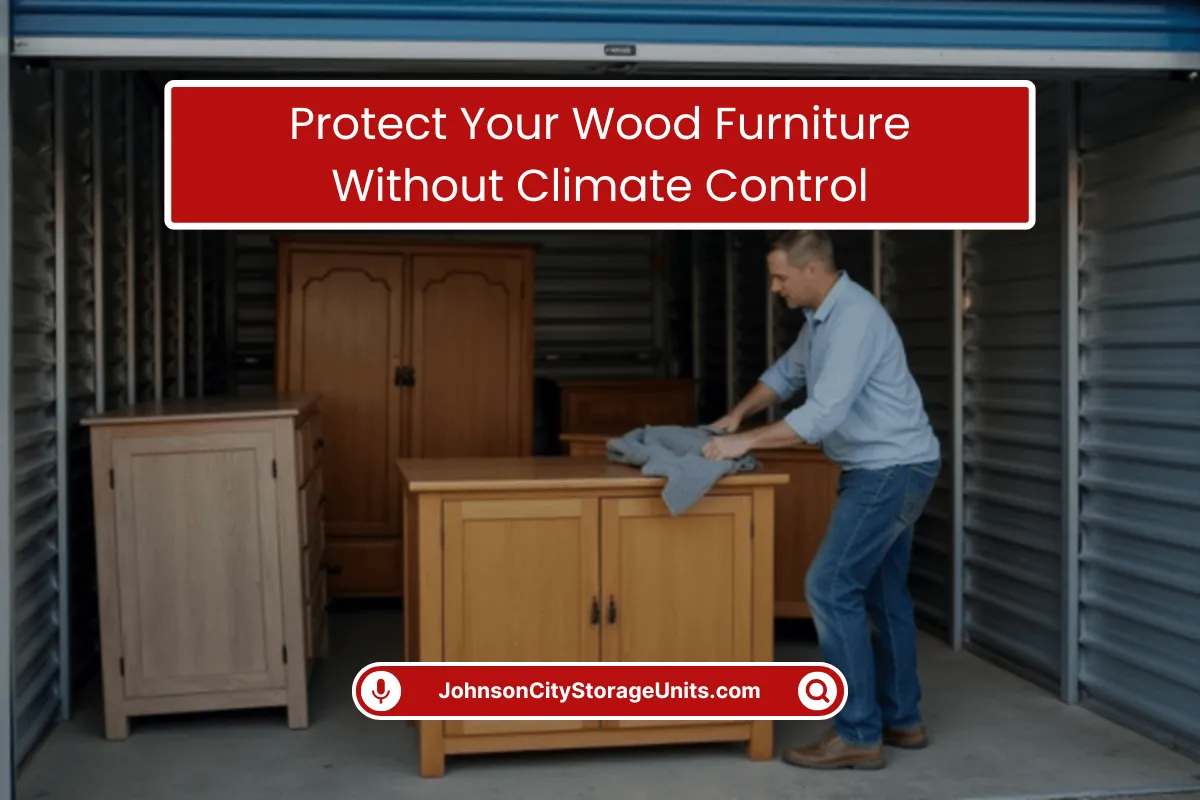
You would not believe how many people come into my office looking stressed about this exact thing. Just last week, Sana was here, almost in tears, about her grandmother’s solid oak dining set. She was convinced that without paying for our premium climate-controlled unit, the table would be ruined by next winter.
I told her what I’ll tell you: take a deep breath. Your furniture is tougher than you think.
I’ve been running this storage facility for twelve years now, and my dad ran it for twenty before me. We’ve stored everything from IKEA particle board to actual 200-year-old antiques. And here’s the truth nobody talks about: most wood furniture does just fine in a regular storage unit if you treat it right first.
The big secret? It’s all about blocking moisture and letting the wood breathe. That’s it. The temperature changes won’t kill your dresser. It’s the sweat that gets trapped inside that does the damage.
Let me walk you through exactly what I told Sana to do with her table. This isn’t from a manual – it’s from watching thousands of customers succeed (and yeah, watching a few fail and learning what not to do).
You gotta give it a proper shower (but without the water)
I’m serious about this part. Don’t just wipe it down with a dry rag. You need to get the invisible stuff off – the cooking oil film, the sticky juice spills, the skin cells (sorry, but it’s true). That gunk turns nasty over time.
Here’s what you do:
- Grab a bucket and mix a tiny bit of Murphy’s Oil Soap with warm water. Don’t go crazy – like a capful in a gallon of water.
- Use a soft cloth – an old cotton t-shirt is perfect. Wring it out until it’s just damp, not dripping.
- Wash every single surface. Get the crumbs out of the carvings. Wipe the underside of the tabletop (nobody ever does this!). Clean the drawer tracks.
- This is crucial: immediately dry everything with a separate, dry cloth. Don’t let the water sit.
This ten-minute cleaning might be the most important step you take.
Next, play some furniture Tetris
Take the thing apart as much as you can. I know you’re tired from moving. I get it. But in the future, you will send me a thank you card.
- Unscrew the table legs. Take the leaves out. Remove the mirrors from dressers.
- Here’s my pro tip that has saved marriages: get a ziplock bag. Put every single screw, bolt, and weird little piece of hardware into that bag.
- Now tape that bag to the underside of the tabletop or inside a drawer. Write exactly what it’s for with a Sharpie: “FRONT LEFT LEG SCREWS.”
- Wrap the glass table leaves or mirrors separately in moving blankets. Write “GLASS – FRAGILE” on them in big letters.
Now for the big one: the wrap job
This is where I see the most mistakes. People think they’re being smart by wrapping everything in plastic shrink wrap. Please, for the love of your furniture, don’t do this.
Plastic is the enemy. It traps any moisture inside and creates a mini swamp around your wood. That’s how you get warping and mold.
What you should use:
- Moving blankets are the gold standard. You can buy them cheaply or rent them from us.
- Old comforters or quilts work great, too.
- If you’re using sheets, make sure they’re cotton, not polyester. Cotton breathes.
- For super sharp corners, it’s okay to use a little bubble wrap, but then cover it with a blanket.
Wrap it like you’re bundling up a kid for a cold day – snug but not suffocating.
Setting up shop in your unit
You’ve done all this work – don’t ruin it by just throwing everything in a pile.
- This is non-negotiable: get your furniture off the concrete floor. Even on a dry day, concrete can pull moisture. We have free wooden pallets out back for customers. Use them. Or throw down some 2x4s. Just create an air gap.
- Leave some space between your furniture and the walls. About 2-3 inches is perfect. You want air to be able to move around.
- Put the heaviest, biggest pieces in the back. Stand table leaves and mirrors on their sides against a wall (well-padded, of course).
- If you want extra insurance, grab a few moisture absorbers like DampRid from the hardware store. They’re like little buckets of crystals that suck moisture right out of the air. Toss one in the corner of your unit.
Sana followed these steps exactly. She rented one of our standard 10×10 units instead of the more expensive climate-controlled one. When she came back eight months later to get her table for her new house, it was in perfect condition. She actually came into the office and gave me a hug.
That’s the thing – your furniture has been living in your house through winter dryness and summer humidity for years. It knows how to handle changing conditions. You just need to give it a fighting chance by keeping it clean, dry, and able to breathe.
The Bottom Line
And that’s where we come in. Once you’ve prepped your pieces like a pro, our job is simple: provide a clean, secure, and dry space to keep them safe. Our standard units are perfect for well-prepared furniture. The doors seal tight, the roofs don’t leak, and we’re here every day keeping an eye on things.
If you’re ever unsure about anything, just ask. Seriously, come knock on the office door. I’ve probably seen your exact situation before and can give you a hand. That’s what we’re here for – to help you store your stuff smartly.
Because that dining table isn’t just wood and glue, it’s where your family eats Thanksgiving dinner. We get that.










0 Comments