
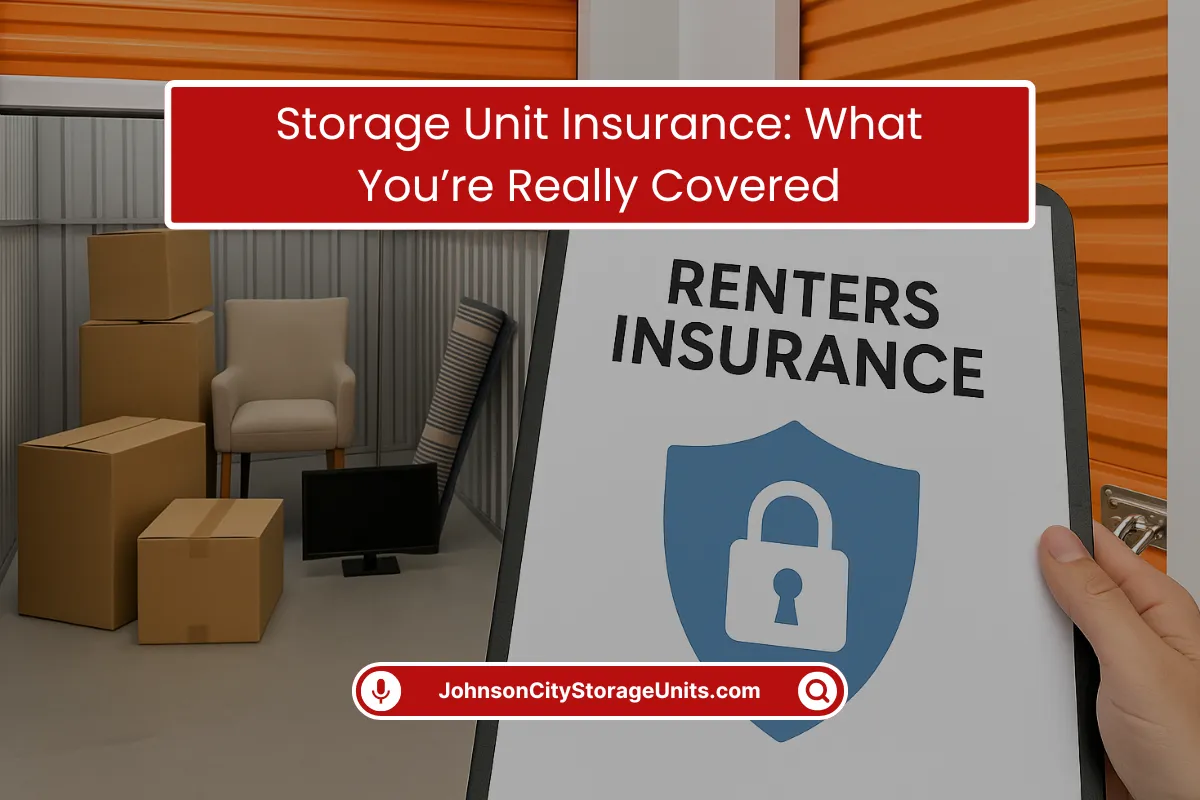
Alright, let’s have an honest chat. You’ve just finished hauling the last box into your new storage unit. You’re sweating, maybe a little sore, but there’s that feeling of accomplishment. Your stuff is safely tucked away in a clean, well-lit space. You snap the lock shut and think, “Job done.”
I’m here to tell you, friend, the job is only half done.
And this is the part everyone glosses over until it’s too late: insurance. I’ve been in this storage business for over a decade, and I’ve seen the good, the bad, and the heart-breaking. I’ve stood with customers in a flooded unit, watching them sift through ruined photo albums. I’ve seen the face of a small business owner realizing their entire inventory of handmade goods is smoke-damaged. The first thing they always say, every single time, is: “I thought I was covered.”
Let’s cut through the jargon and the sales-speak. This isn’t about scaring you. It’s about giving you the real talk you need.
First, the cold, hard fact
When you rent a unit from us, or from anyone else, you are renting empty space. The bricks, mortar, and roof are covered. The things you lovingly packed inside that space? That’s your responsibility. Our security system is top-notch, our buildings are solid, but we can’t control a freak pipe burst two units down, or a tornado, or the determined thief who somehow gets past three gates. Life happens.
The “My Home Insurance Has It” Myth
This is the big one. Most people assume their homeowner’s or renter’s policy is a safety net. Sometimes it is. But here’s the kicker they bury in the fine print:
- There’s almost always a cap. Your policy might say it covers $100,000 for your belongings, but for stuff stored outside the home, that coverage might drop to 10%—just $10,000. Is that enough for what you just stored? Be honest.
- It probably says “NO” to floods and earthquakes. These are huge risks for storage facilities, and they’re almost always excluded unless you specifically pay extra.
- Running a business out of that unit? Storing inventory, tools, client files? Forget it. Standard home policies wash their hands of business property the second it leaves your home office. I’ve seen this destroy side hustles.
So, what are your actual options?
- The “Official” Add-On: Most reputable facilities, mine included, offer a simple insurance plan. We’re not insurance brokers, but we partner with a company that gets it. The beauty is in the simplicity. You pay a few extra bucks a month, and you get a policy built specifically for storage. The big things—fire, theft, water damage—are usually covered. You can often add flood protection. And when you need it, you call them, not us. It takes the guesswork out.
- The “Do-It-Yourself” Policy: You can hunt down your own storage insurance. This is great if you’re storing a classic car or a wine collection. It’s also more paperwork and requires you to be your own advocate. You need to be detail-oriented.
Here’s the real talk no brochure will give you:
The single most important thing you can do isn’t buying the policy. It’s what you do before you buy it.
Take Pictures. Lots of them
Not just of the boxes. I mean, open the boxes. Take a photo of your living room set in your living room before it gets disassembled. Get a close-up of that flawless tabletop. Film a slow walk-through of your garage before you pack the tools. For electronics, write down the model and serial numbers on the back of your phone.
Why? Because when you file a claim, “I had a beautiful, like-new sofa” means nothing. “Here is a timestamped photo and video of my Pottery Barn sofa, model #CH45, purchased in 2021, showing no stains or tears” is everything. It turns a story into evidence.
Also, know that “valuables” means something specific to insurers. Your grandmother’s engagement ring, your signed baseball, your original artwork—these items have very low limits on a standard policy. If you’re storing truly irreplaceable items, you need to declare them and pay a little more to have them specifically covered. It’s a pain, but losing them with no recourse is a nightmare.
My bottom line, as someone who sees this every day:
Don’t let insurance be the afterthought you click through on the rental agreement. Pause. Breathe. Ask us questions. Call your home insurer and ask the direct, boring questions: “What is my off-site coverage limit? What’s excluded? Do you cover business inventory?”
The goal of using a storage unit is peace of mind. That peace is hollow if it’s built on a foundation of “it’ll probably be fine.” At our place, we give you the secure, clean, accessible space. The final layer of security—the financial safety net for the memories and value inside your boxes—that’s a partnership. It starts with you doing this one last, unglamorous, critically important task.
Get the coverage. Document your stuff. Then you can truly walk away and relax, knowing your things are protected, not just stored.





0 Comments