
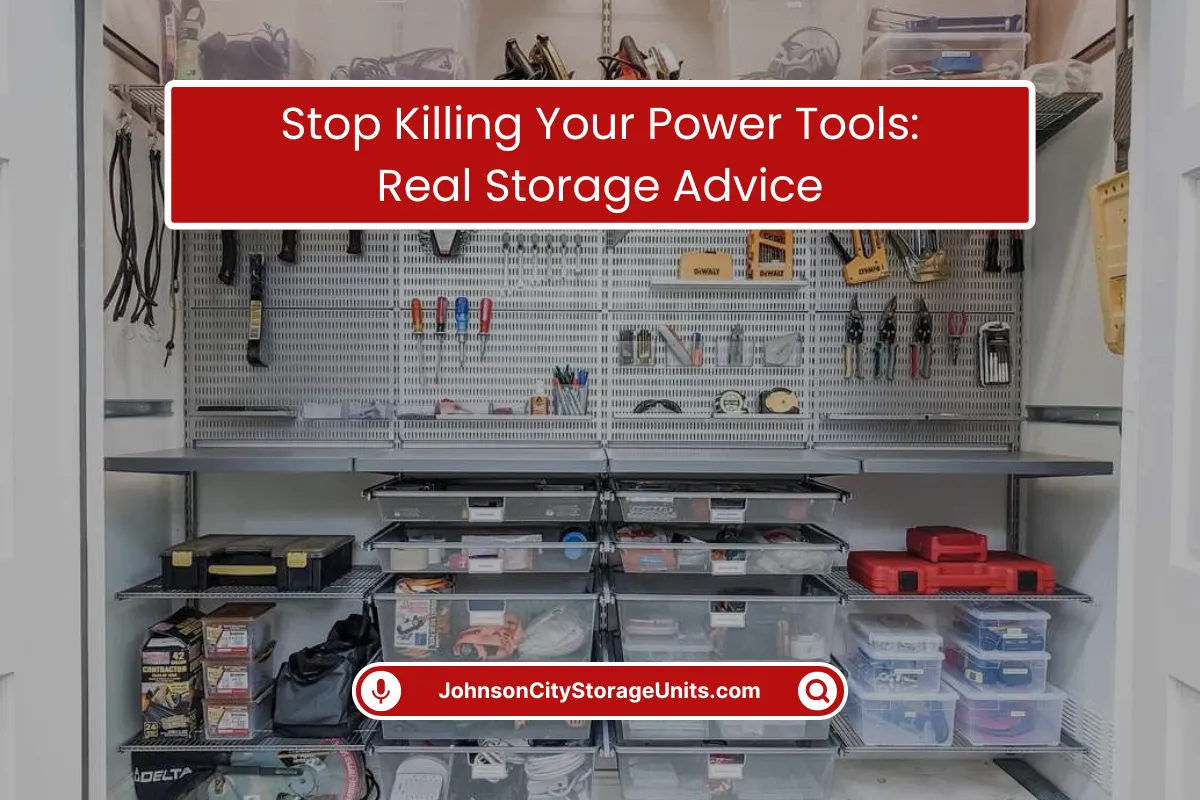
Alright, let me put the laptop aside for a second. I’m talking to you from my actual workshop. It’s a mess right now—coffee cup on the table saw, sawdust on the floor, and my favorite DeWalt drill is sitting on the bench because I just finished fixing the back gate. Again.
I used to kill power tools. Regularly. Not on purpose, but through sheer neglect. I’d treat them like disposable things, not the trusty sidekicks they are. Then, one winter, I lost nearly everything.
See, I used to store my gear in my dad’s old barn. Unheated, uninsulated, just a tin roof and four walls. I thought it was fine. Tools are tough, right? Wrong. Come spring, my circular saw had a rusty blade that wouldn’t spin, my cordless batteries were dead as stones, and my orbital sander made a grinding noise like it was full of gravel. I stood there in that cold barn, feeling like an idiot. I’d spent good money on these things, and I’d just… let them die. Not from use, but from apathy.
So I figured it out. The hard way. Here’s what I actually do now, no fluff, no “life hacks.” Just real, simple actions that work.
First—and this is the biggest thing—stop lying about where you store your tools. Your damp garage, your unheated shed, that leaky basement corner… they’re not fine. If you wouldn’t sleep in there overnight in February, don’t make your tools do it. Feel the air. If it smells like wet leaves or mildew, your tools are rusting. Right now.
The clean-up ritual
I don’t do a full detail. I do what matters. When I’m done for the day, I grab the shop rag I keep in my back pocket.
- Wipe down every metal surface I touched. The sole plate of the saw, the chuck of the drill, the metal bar on the jigsaw. Just a dry rag, hard pass. Gets the sweat and fingerprints off. Skin oil attracts moisture. Moisture makes rust.
- Blow out the vents with my mouth. Seriously. Not the air compressor—that just drives dust deeper. I blow hard into the cooling vents to get the big dust bunnies out. Then a quick brush with an old paintbrush.
- Pull the batteries. Every single time. No excuses. I don’t leave them in the tool overnight, let alone for a season. They go on a shelf in my kitchen pantry. Indoors. Where it’s dry and the temperature never swings wildly.
The big secret? It’s not about being fancy
People online will tell you to buy special oils, silica gel packs, vacuum sealers… I used to think I needed all that. I don’t. I use what I have.
- For long-term storage (like over winter), I give metal parts a wipe with a light oil. But not motor oil—that’s too thick. I use plain old 3-in-1 oil, the same can my granddad had. A tiny drop on a rag, wiped on. Protects the metal without gunking things up.
- I keep my blades and bits in old coffee cans. Not for organization, but to keep them dry. I throw a handful of uncooked rice in the bottom of each can. Rice absorbs moisture. It’s a dirt-cheap trick my grandma taught me for keeping salt from clumping. Works for drill bits, too.
- I never, ever leave a tool sitting directly on concrete. The floor is a moisture magnet. I use scraps of 2×4 as little feet under everything. Air needs to circulate.
Batteries are the heartbreakers
I killed three expensive lithium-ion batteries before I learned this. The absolute worst thing you can do is store them fully charged or completely dead. It murders the cells.
Here’s my rule: If I’m not using the tool for a month or more, I run the battery down to about half—two bars out of four—then take it out and bring it inside. I keep them in a cardboard box in the pantry, away from the coffee maker (steam) and the stove (heat). Room temperature, dry, stable. That’s it. They wake up happy every time.
The real talk on space:
For years, I fought a losing battle with my garage. No matter what I did, spring brought a flash of rust on my table saw top. It was infuriating. Then, when I moved and had to put my shop in storage for a few months, I rented a climate-controlled unit on a friend’s recommendation. I was skeptical. It felt like overkill.
It wasn’t.
Walking into that space was a revelation. It was just… neutral. Not hot, not cold, not damp. Just still, dry air. My tools sat there for four months. When I pulled them out, they were exactly as I’d left them. No rust. No funk. The batteries still had a charge. It was the first time I’d ever put tools away and had them come back ready. Not needing rescue. Just ready. That changed how I thought about storage completely. It’s not just dumping stuff somewhere—it’s giving your gear a safe place to rest. If your home space can’t provide that (and many can’t), finding a spot that does isn’t a luxury. It’s tool CPR.
The payoff:
Last weekend, I went to build a new workbench. My drill, my saw, my impact driver—they all just worked. No coughing, no rusty sparks, no dead batteries. That smooth, immediate response—it’s trust. I trusted them to work, and they trusted me not to leave them in a puddle.
That’s the goal. Not a checklist. Not perfect conditions. Just mutual respect.
You bought these tools to build things, to fix things, to make your life better. They’re partners. Don’t make them sleep in the rain.
Give them a dry corner. Wipe them down. Bring the batteries inside. It’s not a chore. It’s just taking care of your stuff.
Now I’ve got to go. My drill is still on the bench, and I need to put it away properly. Coffee can for the bits, rag wipe for the metal, battery out and onto the pantry shelf.
Then I’m done. Until next time.











0 Comments